An Ordinary, Special Day
Berkeley Weekly Notes · · 10 min read · Thought
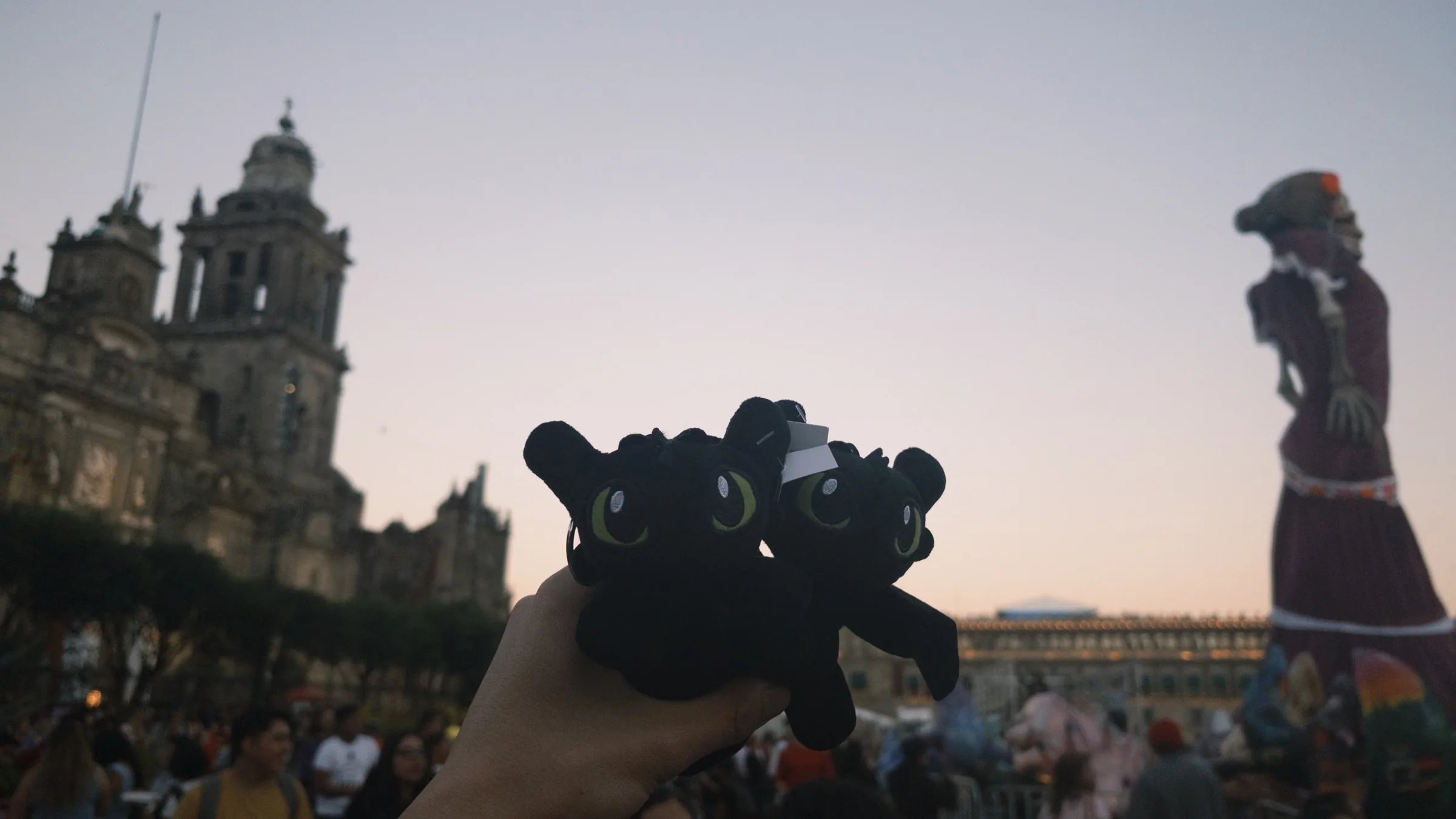
Counting from 2017, when I moved to Guangzhou, I have been living away from my hometown on my own for more than nine years. In those nine years I rarely stayed home for long; I would go back for a few days over the holidays, then head back to Guangzhou and Shenzhen to get on with things. In California the cold always arrives with the night rain. In September and October every day was clear and crisp: a T-shirt with a jacket over it. Then, toward the end of October, came the first night rain, and the T-shirt underneath became a long-sleeved shirt. After I got back from Mexico there were a few more nights of rain; the temperature dropped into the single digits (Celsius), I switched to fleece-lined clothes, and my hands and feet were always cold.
California's rain is shy and likes to hide in the night; during the day the sky is still a clean blue, as it was today. But after rain the ground is wet, so I couldn't do my morning workout in the park and exercised at home instead. Then some time on my phone and making breakfast threw off my plan for the day. Whenever that happens I feel awful and drained, so I decided not to go to my desk today and to study and work from home. It's Friday: why not move my free time from Sunday up to today, and go back to my desk on Saturday and Sunday? The standard I've set myself is nine hours of focused work a day; add exercise, meditation and video calls with my family, and the day is almost completely full. I still can't stand having my plans disrupted, or being off schedule by even fifteen minutes. I can't stand idleness. Even leisure, trips and entertainment can only exist for me as planned activities. It seems I really find it hard to break free of time's hold.
Once my plans are disrupted, anxiety about time eats away at my energy bit by bit.
The upside is that in this routine I grow fast; the downside is that I miss the inspiration that comes from uncertainty. I've hardly read books or watched films, haven't gone out for walks, haven't played music. In the spare moments of my trip to Mexico in early November, I read The Order of Time on my Kindle. Perhaps time doesn't exist; clock time is only a convenient, rough measure of how things change (what we call events), and it is no more special than any other measure. That was when I resolved to declare war on time. I no longer want to divide my life by age. Instead, I want to judge how I am changing by whether I am still curious about the world, whether I am calm and at peace inside, and how my body and energy are.
Tonight, listening to a white-noise track of temple wooden fish and singing bowls, I kept writing my journal at my desk. Sitting up straight, stroke by stroke, I slowly found my inner calm again. When I scroll through news on my phone, the more I read the hungrier and more drained I get; I go through a few social apps over and over, and the more I scroll the more tired I get, and the more tired I get the less I can stop. I think happiness lives in slowness: reading slowly, writing slowly, working through formulas slowly by hand, listening to music slowly. Dopamine rises and falls like the tide; the flip side of pleasure is boredom and emptiness, round and round. Happiness is calm — light, and long-flowing like a quiet stream.
When I woke up this morning I saw that Claude had produced a proof of the Riemann Hypothesis. I was deeply moved to witness this day in my lifetime, and so soon. The Riemann Hypothesis means something very special to me; you could say it was my introduction to mathematics. It was the summer after my first year of middle school, back in my hometown. I sat on the sofa with a thick popular-science book, Prime Obsession, and what astonished me most was that with the little middle-school math I knew, I could build up the edifice of mathematics step by step — that a first-year middle schooler could understand the crown jewel of number theory. I found my younger brother, then in fifth grade, and explained the prime number theorem to him until he understood it. Then I dreamed of following Euclid's Elements and building the whole of mathematics from scratch out of elementary-school addition and subtraction. Later I learned that this was the shattered dream of mathematicians a hundred years ago.
I wonder what scientists of a hundred years ago would think of what AI has achieved in science today. Yesterday I talked with a friend who did his bachelor's and master's at Tsinghua and is now doing a PhD at Berkeley. He said he was very anxious, and felt he might well not find a job after graduating. It struck me: if even people like him, unquestionably at the very top of the traditional pyramid, are anxious, and if the most cutting-edge intellectual work humans are proudest of can be replaced, what will that world look like? Over dinner I said I largely agree with what Sapiens says — that humanity will eventually split into a "useless class" and "gods": productivity will rise enormously, and nowhere near as many people will be needed for production. If the "useless class" can enjoy the abundance of that leap in productivity at very little cost, all well and good. But if resources are held by a tiny, tiny few, with no institutions to ensure fair distribution, what then?
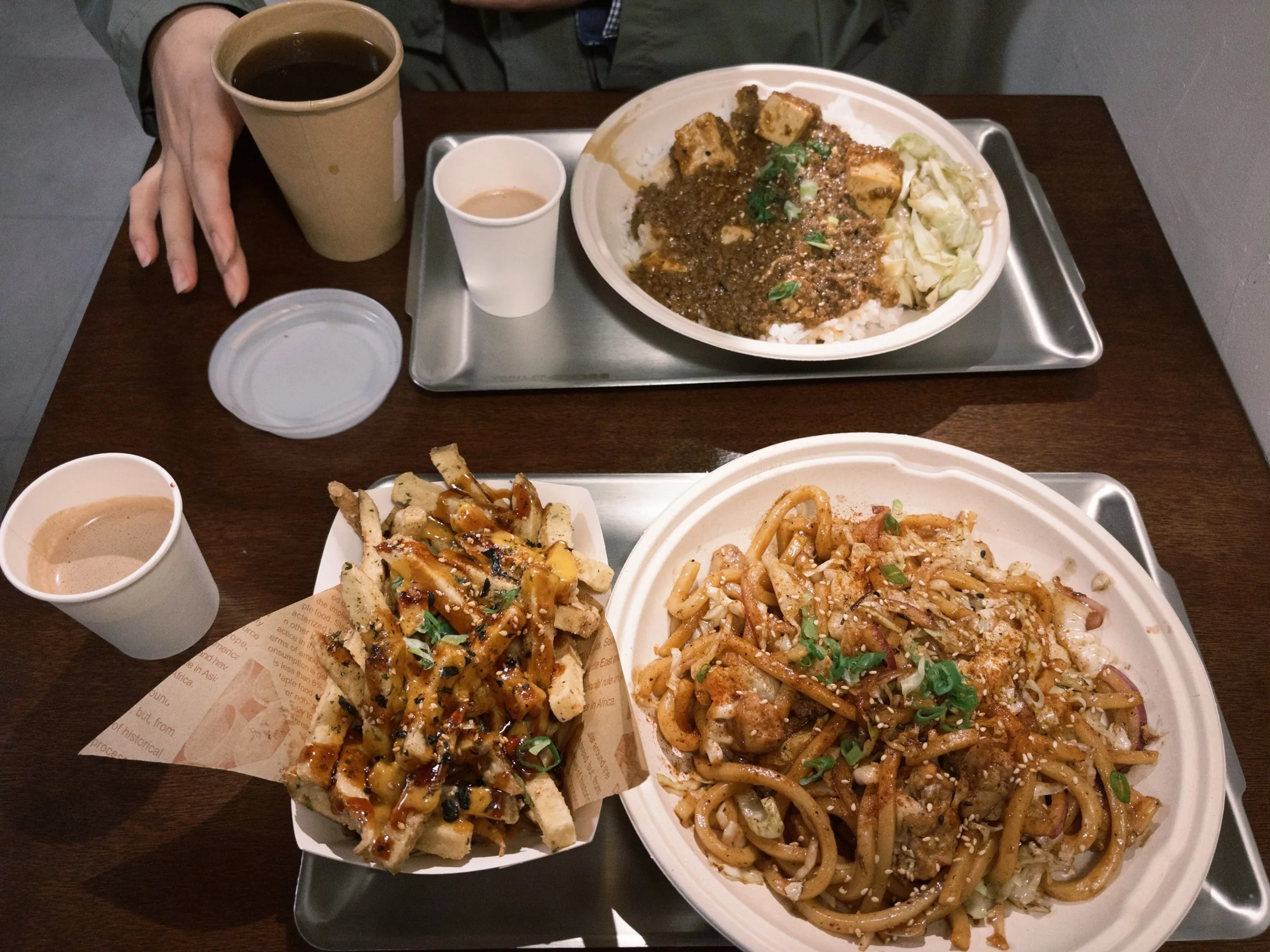
My mind was a little unsettled today. My hands and feet have been cold lately, which shouldn't happen given that I eat and sleep well. It has been exactly three months since I came to the US; my bangs reach my lips and my hair touches my shoulders. I ordered hair-cutting scissors and a comb from Walmart, and tomorrow morning I'll trim my bangs myself. I want long, straight black hair like Naomi Misora's.
At nine in the evening I skipped sitting meditation and tried zhan zhuang, standing meditation, instead. Standing is quite different from sitting: it seems better at opening up the meridians and at feeling the body connected as a whole. In sitting meditation I don't dare try anything like guiding qi with intention; I just sit and watch the mind, calm and even, watching thoughts arise and pass away. I have met two masters, and both advised sitting rather than deliberately cultivating on my own, which can easily lead you astray. One of them said it was lucky I'm not too gifted: he had known someone of great aptitude who, sitting and sitting, found that only he was left in the world — he had emptied everything out. It was frightening. With standing meditation you don't need to guide the qi deliberately; you can feel it naturally. Breath by breath, drawing it down to the soles of the feet, you feel the qi flowing through the body, completely relaxed. "The true people of old slept without dreams and woke without worries; they ate without relish, and their breathing was deep. The true person breathes from the heels; ordinary people breathe from the throat."
While I was standing, I noticed my phone buzz several times, which was unusual; people rarely video-call me on WeChat at night. My mind wavered a little, but I came back to myself, and only picked up the phone when I had finished. My dad had called again. He was having dinner with a few friends and, laughing, wished me a happy birthday: by Pacific time it wasn't quite the day yet, but by China time it was already my lunar birthday. My mom called too, laughing, telling me to stay healthy and be happy every day, and I said we should all stay healthy, happy and safe. The family group chat was full of birthday wishes, and my younger brother, who is in middle school, messaged me privately with some cute stickers. Being cared about like this really does feel different: so warm, so full of love.
I grew up in a big extended family. We celebrated birthdays together, celebrated everything together, lived together. Although I have spent half my life away from home on my own, the love I received from that big family as a child has carried me far and long. I always thought I was simply born strong, driven by an upward spirit. But after university, talking with more people and understanding the world more deeply, I came to see that this underlying character was formed largely by the love and nurture of my childhood. Now I am working to become even better, and to help my younger brothers and sisters with everything I've learned and seen.
When I go home for Christmas, I want to teach my parents standing and sitting meditation. My mom practices yoga regularly, so she's fine; it's mainly my dad, who doesn't think much about exercise: he sits a lot and hasn't exercised in a long time, so intense exercise isn't right for him. Standing nourishes the qi; stillness cultivates the mind. I think it would suit them especially well. It's good for the body, and this calm can carry over into everyday life.
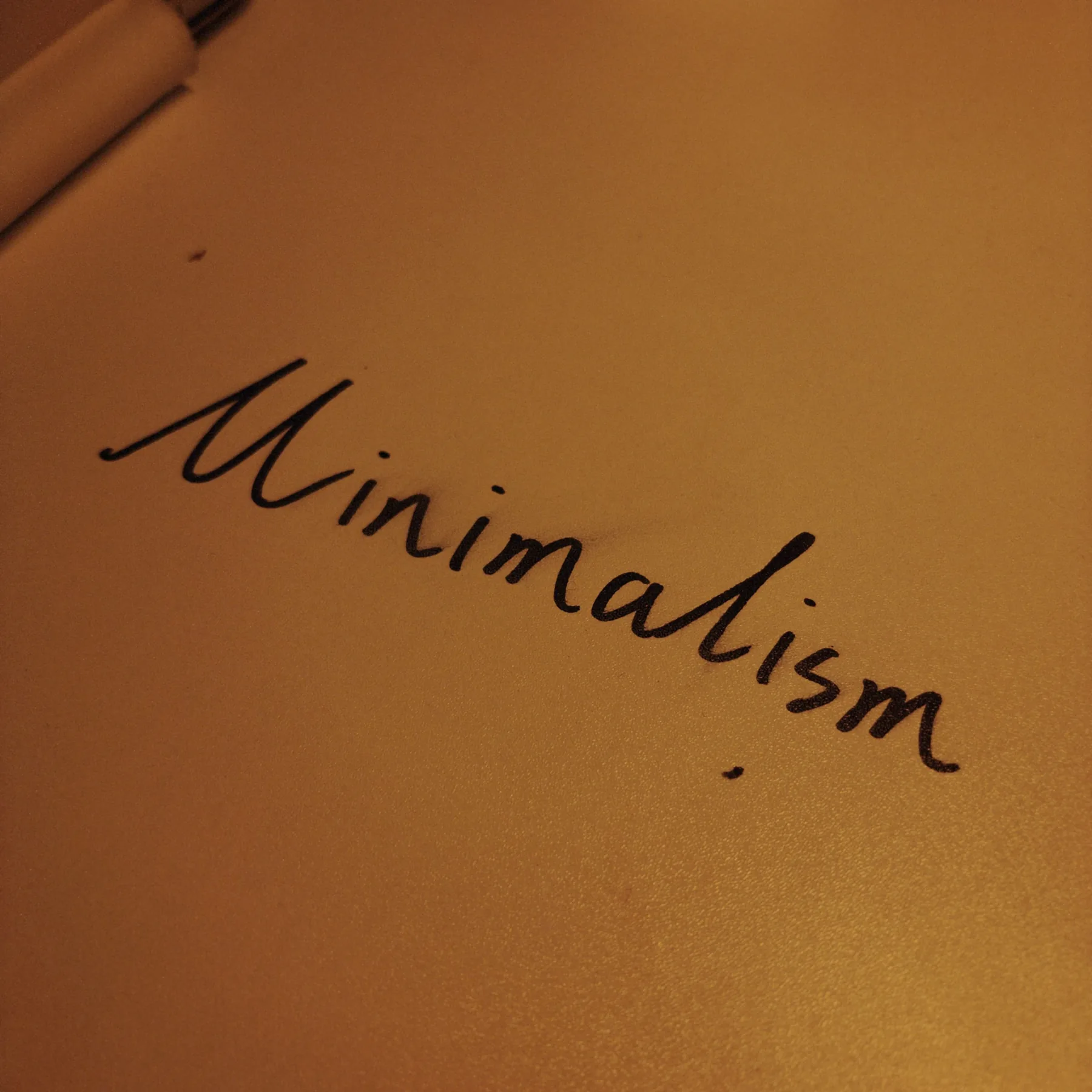
At twenty-one, I think the best gift I have is my family's love. They are a big part of what keeps me going. Today, on my twenty-first lunar birthday, I feel I received three more gifts: one is Claude's proof of the Riemann Hypothesis; one is standing meditation, which I'll make part of my life as a habit; and one is Minimalism, the principle I have always lived by.
A poem by Chairman Mao came to mind; let it close this entry:
饮茶粤海未能忘,索句渝州叶正黄。
三十一年还旧国,落花时节读华章。
牢骚太盛防肠断,风物长宜放眼量。
莫道昆明池水浅,观鱼胜过富春江。Tea together in Canton — I have not forgotten;
verses asked for in Chongqing as the leaves turned gold.
Thirty-one years on, I return to the old capital;
in the season of falling flowers I read your fine lines.
Too much grievance may break the heart;
better to take the long view of things.
Do not say the waters of Kunming Lake are shallow —
for watching fish, they surpass the Fuchun River.— Mao Zedong, "Reply to Mr. Liu Yazi" (seven-character regulated verse)
( Berkeley)
Translated from the Chinese original.