The Death of God. Then What?
Thought · · 5 min read
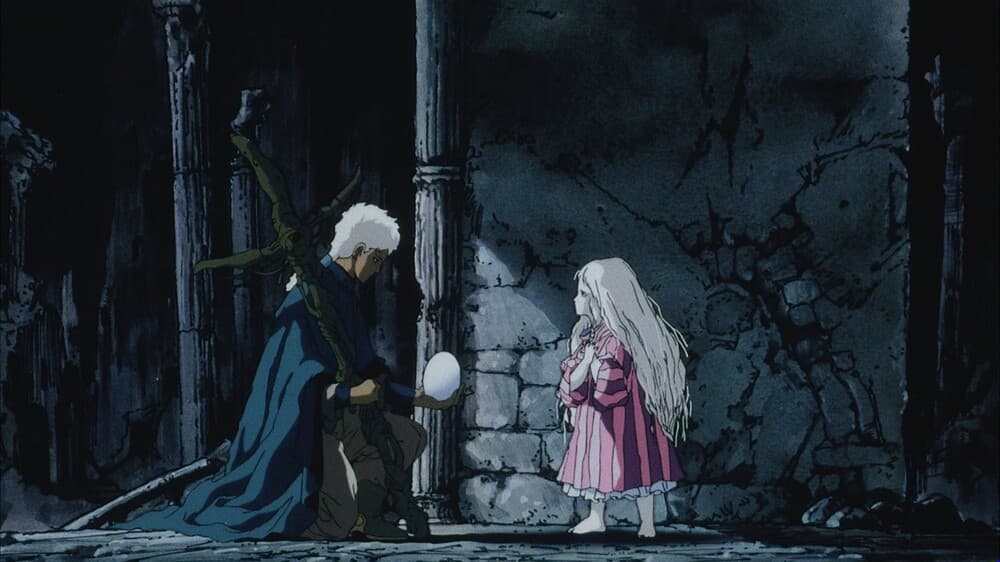
The Enlightenment brought about the death of God, and the people it forced to disenchant the old world lost their footing. Reason raised the hammer of science and brought down the temple of religion — and then what? The ruins are left. Who rebuilds, and where is the human spirit to live?
In the modern age we are too infatuated with science; we deify it. The territory of truth still holds far too much that cannot be said and has no way of being said, let alone by a modern science still in its cradle — let alone when science is itself only one way of knowing the world, a paradigm that keeps being replaced (Kuhn), with limits of its own. If induction cannot reach truth by logic, and deduction can only unfold what is already known, then everything we build inside the scientific frame can only be called theory, awaiting falsification (Popper), only ever approaching truth. How then do we know truth? How do we pursue meaning, value, and existence, which reason cannot adjudicate? That is the territory "above physics" — metaphysics.
In high school a close friend told me she had fallen into nihilism and could not think her way to the meaning of life. Everyone teased her for adolescent melancholy. But to be able to think about meaning and value, to be young and sensitive and full of feeling — compared with the dull middle-aged who have been trained by society out of thinking and out of dreaming, is that not a good thing? Besides, the scores-above-all system of evaluation that secondary school preaches is itself false and brittle; any student capable of a little critical thought can feel that something is off. I remember talking with her about meaning driven by scores. On the conventional social path, I said, a person is always pushed along by evaluation systems and goals supplied from outside. Meaning is conferred by society: from scores to GPA, from salary to rank, from the car and the postcode to the brand you compete with. It is not only the college-entrance score that is an illusory meaning; follow the chain to its end and all of it is. Even setting the external aside: you study in order to work, work in order to earn, earn in order to be free, are free in order to be happy — and happiness is for what? At the end of every purpose, what is there? Or: what is the root of all this existing? That is the question metaphysics asks. It is not the idle daydreaming of someone with nothing better to do. It is the question the wisest minds of every age have pursued without verdict, and in the end have fallen silent before. Aristotle called it the first cause; Christianity called it God; Chinese philosophy calls it the Dao, or the principle of Heaven. That is metaphysics.
I remember that in high school my own philosophy put experience at the end of the chain of purposes, and then led experience back to the present moment. Joy, anger, sorrow, delight, love and parting, wanting and not getting, holding on and not being able to let go — all of it is the rich, brilliant experience of being alive. Having come this way once, it is hard to find any other meaning beyond these. So I said: fix your purpose on the process; the meaning we chase is in the experience of each day — even if school really is a very small world.
Now I think again: "the final purpose is experience; existence itself is the meaning" — in today's terms, is that not metaphysics? Can I derive that statement by reason? Can I prove it by objective experiment and evidence? Absolutely not. It can only be called a subjective idea from my own experience. Is that not metaphysics?
Religion does something similar: it gathers a great crowd of followers and tells them what the root of purpose is, how life and death depend on each other, what the origin of existence is. Or, like Confucianism, it maintains the workings of society through rites and music, and answers purpose with morality.
And now? Reason, enthroned above all, has shut down the metaphysical search; materialism has become the supreme truth, and whoever questions it is called superstitious and backward. Physics tries to tell people that the world runs mechanically, with no cause and no purpose. The trouble is: with no cause and no purpose, what does a person live for?
With God gone, humanity loses its fire. The modern substitutes swarm in — science, progress, nation, culture, virtue. These ideologies, scientific and unscientific alike, all repeat one gesture: they declare themselves scientific, rational, empirical, and quietly install at the bottom a set of presuppositions they cannot themselves verify.
This is the predicament of self-reference, and the root of why metaphysics does not die. Any instrument turned against metaphysics itself presupposes a metaphysics it cannot verify.
The death of God. Then what?
Either admit that God is truly dead, and go and become the overman yourself, and build meaning; or concede that meaning has no answer, and accept that your life stands on a castle in the air.
Or keep silent. Of what cannot be spoken, say nothing. Not speaking does not mean it is not real. Return to this moment; go through it; come to know it.
Translated from the Chinese original.