Berkeley Weekly Notes (I)
Berkeley Weekly Notes · · 6 min read · Thought
This was my first week at BAIR. With the GRE dealt with last week and my NLP midterm done yesterday, I can finally put my whole heart into my research. BAIR is in Gateway, the building Berkeley opened just this August. The ground floor and the basement are public space: most CS classes are held here, and the basement also has small rooms for discussions and seminars. Past the public space, in the middle of the ground floor, there is a gate with "Research Fellow Area" written large above it, and behind it floors 2 to 5 are BAIR. Many well-known AI labs are here. You could call it the heart of AI research in the Bay Area.
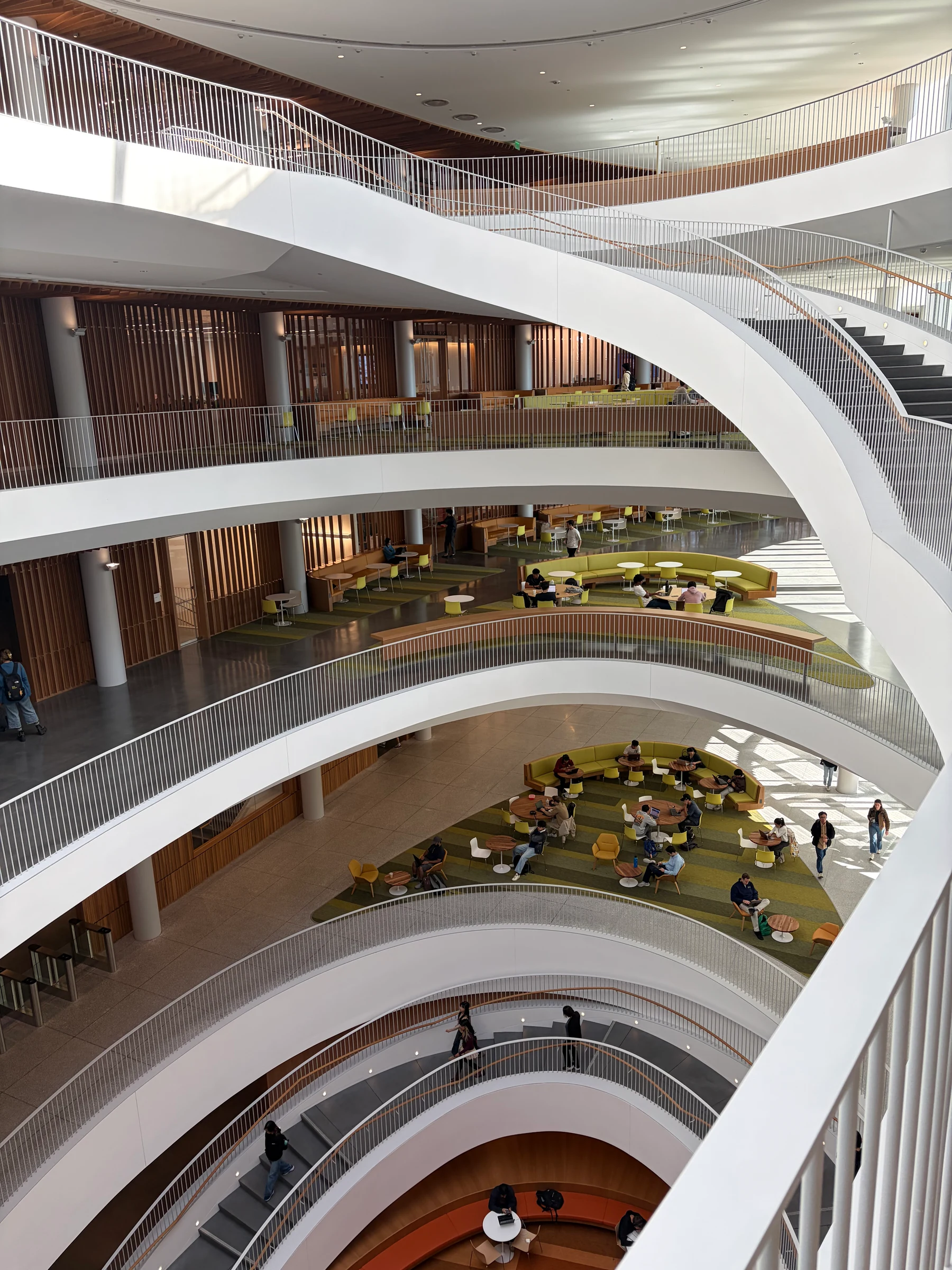
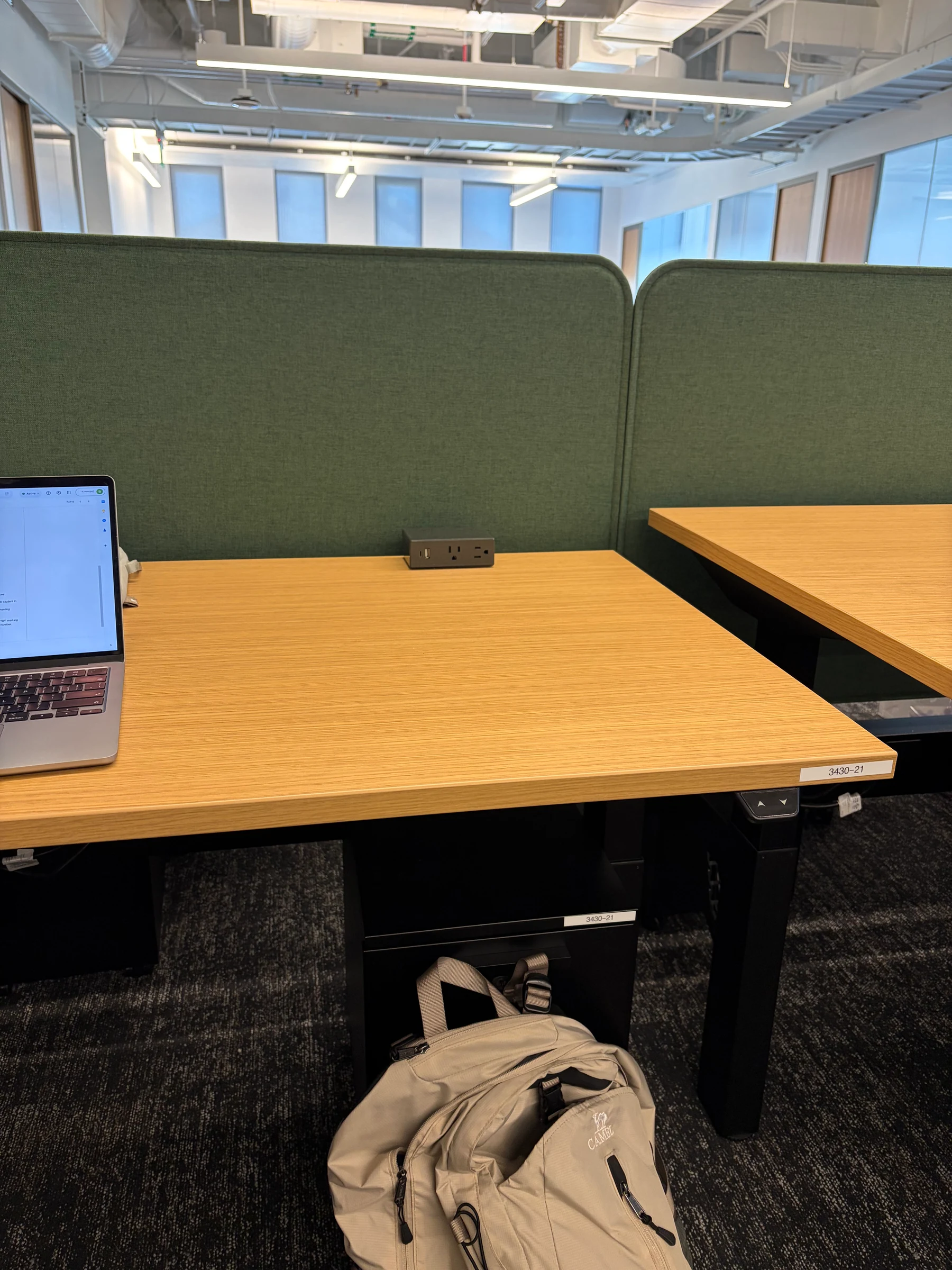
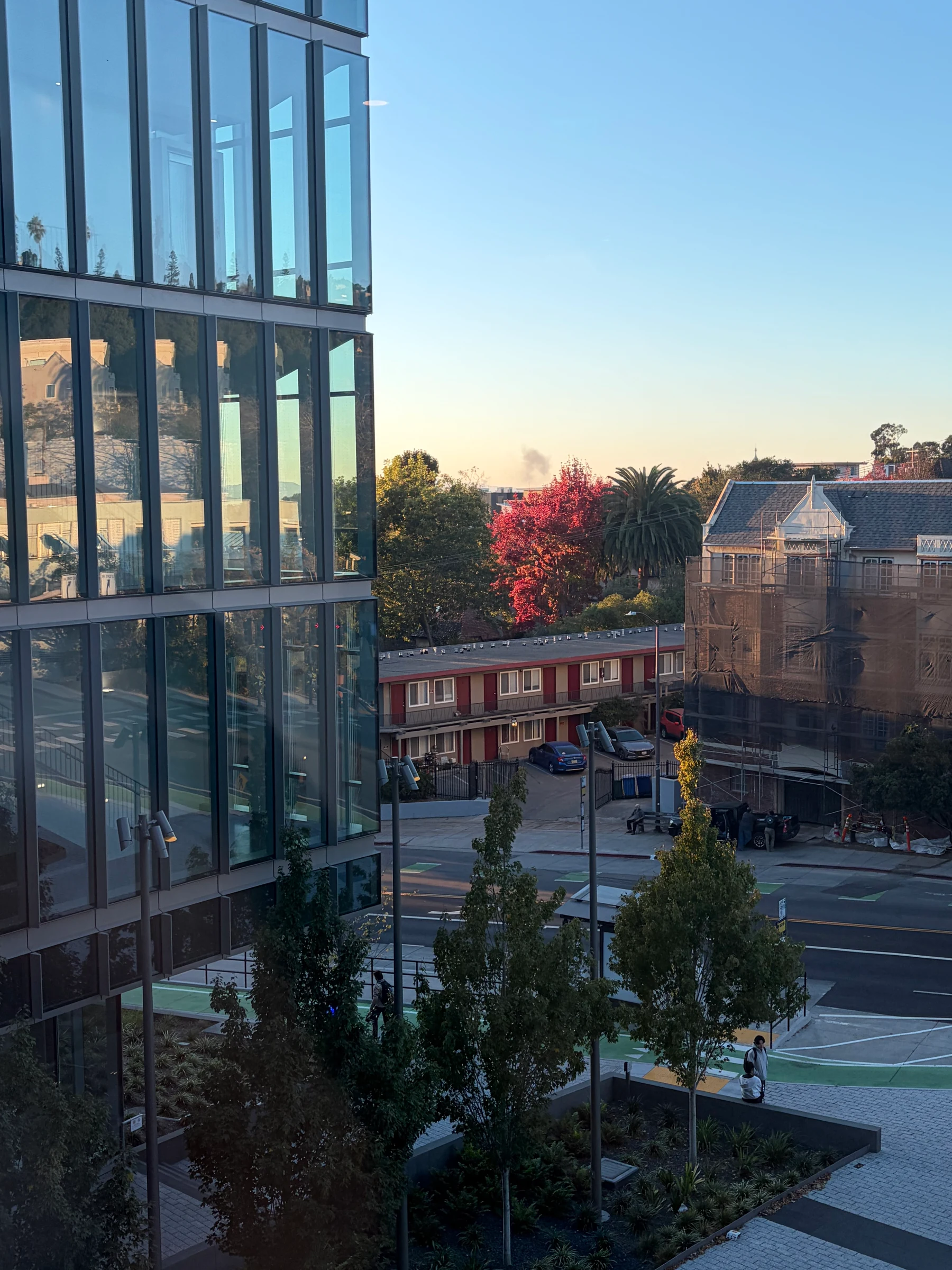
I was especially lucky to get into a lab, where I've made many friends, and I applied for a desk in BAIR's PhD area (a brand-new, extra-large standing desk, lol). The space is huge. The building is hollow right through the middle, which gives it a real sense of design, and its outer walls are all glass, so you can see blue sky, white clouds and the sunny little houses you see everywhere in America and Europe. It makes me so happy. Every evening, cycling home westward along University Avenue, I get to see the sunset and the glow it leaves in the sky. Almost every AI seminar, and almost every talk by big names from industry, happens at Gateway: this afternoon there's an NVIDIA Research panel, next week one from Meta, all top-tier chances for industry collaboration aimed at graduate students. I can't help marvelling at how many resources researchers in America have.
The odd thing is that I barely touched research in my first three years of undergrad. I started in my fourth year; to be precise, it was this August that I first got into AI research. That's strange. Ever since I was little, research and starting things up have been the modes I like most, and am relatively good at, and yet for three years of undergrad I hardly touched research. Why? Because I didn't know. I didn't know that research is exactly this kind of work (finding problems, making innovative improvements). I thought a CS degree could only make you a code monkey writing front ends and back ends, or doing ops, algorithms or testing. For the past three years I "didn't know what I didn't know", and that is the most fatal thing of all.
So now I'm working, step by step, towards "information equality".
On one hand, I'm building my own information feeds and filters, so I can come into contact with more fields and perspectives and fine-tune my understanding and direction, like doing "reinforcement learning" on myself. Last week I listened to whynottv's interview with Jiayi Weng (翁家翌), and he made a point I strongly agree with: what frontier labs compete on now is infrastructure. What matters most to them is the number and quality of experiments per unit of time, and better infrastructure lays the groundwork for fast experimental iteration. The same holds for personal growth: build good "infrastructure" to raise your personal iteration rate. That "infrastructure" includes the healthy body and highly focused mind that come from a regular life, your information feeds, your personal decision principles, your worldview, your system for reviewing and iterating, and so on.
I strongly believe everyone should design and manage their life, their career and the rest systematically. Our own memory is unreliable, so write things down and keep an archive; the trajectory that archive forms is just what you need to tune your personal decision model. Willpower, too, is completely unreliable. I consider myself someone with relatively strong willpower, and still I'm no match at all for the pull of my phone and social media, for enthusiasm that fades in three minutes, for inertia and procrastination. So what matters most is Environment Design, again part of the systematic design I just described. For example, if you want to get into the habit of going to bed early and getting up early, draw a weekly check-in chart on paper and set a rule: at the set time, switch off every screen and get into bed; if you really can't sleep, read a book or stretch. If you don't want to watch streaming content, delete the apps from your phone, or on your computer use an extension to switch off the recommendation feeds on the web versions and leave only the search box. I made just such an extension, https://github.com/LambertAlpha/feed-gate, and it cuts about an hour a day from my time scrolling social media on my computer, and keeps my mind from wandering while I wait for Claude to reply. And so on. The core point is: never try to fight the downward pull of human nature with willpower. Some people can, but that's because they have tremendous inner strength: an exceptionally lofty aspiration, say, or a dark vitality built up from hatred and resentment (people who achieve things that way all have psychological problems, to some degree).
On the other hand, I'm building my own community and account. I want to do things that have influence and that benefit others, and at the same time push myself to grow by putting more out. Its focus can follow my research directions (RL, post-training, representation learning) and the areas I'm interested in (Web3, neuroscience, startups, investing). There I can share interesting papers I've come across, reflections and thoughts, open-source projects and all kinds of event news, so that people can talk, team up on projects and so on. I also hope to help people like my past self: to smooth out some of the information gaps and unknown unknowns, so they can better explore what they truly care about. The first principle of a community is to benefit others, and being able to build influence by benefiting others is a very happy thing.
(, written at BAIR)
Translated from the Chinese original.